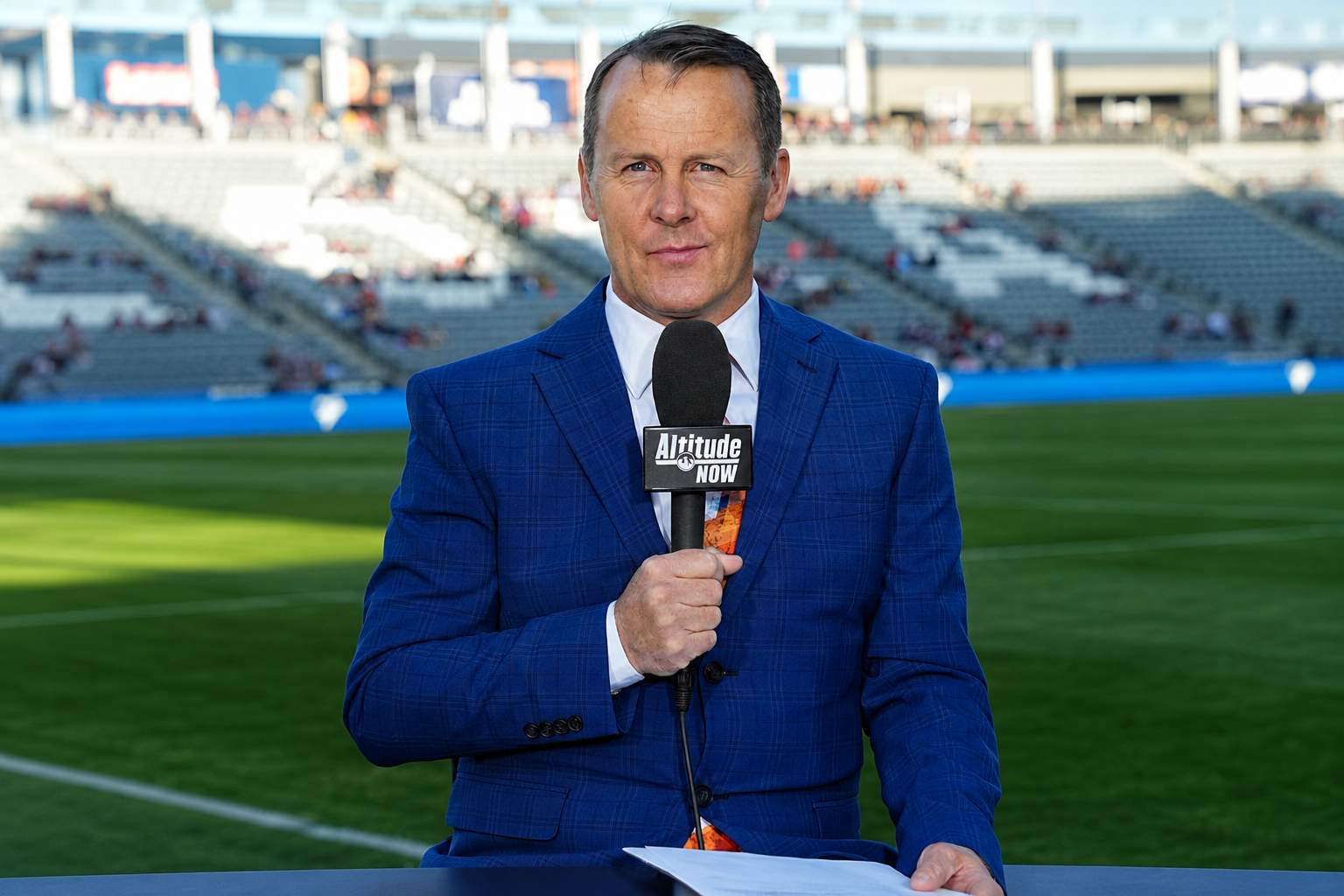
From the BBC to the world’s biggest sporting stages, Richard Fleming has built a career spanning more than three decades in sports journalism, broadcasting and communications. He has covered the Olympic Games, FIFA World Cups and Wimbledon, working across television, radio and digital media.Now Senior Director of Communications and Marketing at USA Archery, Fleming is helping tell the stories of the sport’s athletes on the road to the Los Angeles 2028 Olympic and Paralympic Games.In this exclusive Racebrief.com interview, Fleming looks back on his BBC career, shares his thoughts on the changing face of sports journalism and explains why storytelling remains at the heart of modern sport. He also offers his perspective on Formula 1 and motorsport ahead of the 2026 Azerbaijan Grand Prix.
From the BBC to American sports, what has been your biggest culture shock, and which experience changed you most as a journalist?
I come from a country where football is the number one sport, where the sports media is far more independent and where sport is viewed as entertainment first and business second. Arriving in the U.S., where football is played far more than it is watched live. The media coverage is patchy at best, with it competing alongside sports perceived to be ‘more American’ such as (American) football, ice hockey, basketball, baseball and also the incredibly popular college sport. The football media, like so much other media, is rarely independent with clubs and leagues controlling large swathes of the narrative, with a greater emphasis on marketing than real storytelling through content. I’ve often said it’s more about ‘sell, sell, sell’ rather than ‘tell, tell, tell’. It was coming to a country that is so far advanced in many sports and yet lagging behind in the sport which dominates much of the rest of the world. Football journalism is seen as the bottom rung of the sports journalist ladder, with lower pay, lower profile and a larger turnover of people as they eye the so-called bigger sports. And so the football knowledge of those around me was much less than I had a) expected and b) been used to. Strides have been made but there’s still a long way to go in that area.
You’ve covered World Cups and European Championships. What match or moment from the commentary box still stays with you-and why? That’s a great question but a tough one because often it may not be a single moment in a match, or even the status of the match. I’ve commentated on a World Cup semifinal and Africa Cup of Nations final. I’ve done matches at Wembley (the old version and current one), at the San Siro in Milan and at stadiums up and down England. There are probably two moments, if I’m allowed that. One was being the first BBC sports reporter to cover a match in North Korea. It was 2005 and North Korea was playing Bahrain in a World Cup qualifier. The other would be my first-ever commentary in MLS (Major League Soccer), which I did less than three days after arriving in the States, off a TV monitor in a studio and with a production crew that was vastly inexperienced in the sport. It was baptism by fire, as we say, sink or swim. I did more than 300 matches but that first one always sticks out as it was a real wake-up call as to what I’d walked into.
If you could have one uncensored hour with any F1 driver, past or present, who would it be- and what would you ask first?
It would have to be Ayrton Senna. He remains an iconic figure, whose career and life was so tragically cut short. The first question would be, what impact his accident had on the sport, and though for the better so far as safety was concerned, what did it remove from the sport as a whole?
The Azerbaijan Grand Prix has become an important part of Formula 1’s modern calendar. From your perspective as a journalist, what makes Baku such a distinctive venue for covering F1, and what does the race contribute to the championship’s global identity?
There’s a reason why the Monaco Grand Prix was always noted on the calendars of race fans. It offered street racing and the drama which comes with it, all against a picturesque backdrop. The Azerbaijan Grand Prix has all that, plus the history of Baku and a straight which produces high speeds and the opportunity for overtaking. F1 was always rigid with its locations and that needed to change. Fans needed to be offered something and somewhere different. The opportunity for drivers and teams to be tested technically but also an opportunity for the sport to reach new audiences in new regions, while also offering the long-time fans of the sport an elevated experience. Baku provides that.
Looking back at your BBC career, is there a story you would cover differently today—and what have you learned since?
My time in North Korea, although fascinating on so many levels and for so many reasons, was arguably my most frustrating and one I have most regrets over. I was wary of offending, or landing myself in trouble due to heightened sensitivities, paranoia and deep distrust of the West but as a result I did not tell the story in the way it ought to have been told because people were simply not wanting to speak to me. I was there to create a history of the sport in North Korea due to my interest being sparked by the 1966 team which played in the World Cup in England. It wasn’t the end product I would’ve liked. I’m not sure what I could’ve done differently that wouldn’t have created misunderstanding or – indeed – trouble for me as a British journalist, but I felt there was a richer story to be told.
With football, F1 and American sports competing for younger audiences, what will define the future of sports broadcasting—and is traditional TV ready?
The future of sports broadcasting will not be defined by sports broadcasters but by the younger generation and their comfort level. The industry has to meet them where they are and not the other way around. Some areas of traditional TV has made moves to modernise while others are slowly realizing the need for change. Sports rights are so expensive and the entertainment choice for the younger generation is much more varied. My son watches a lot of sports-related content on YouTube, but not as much live sport. He still enjoys live sport but – quite frankly – and it may sound odd to state, it’s overwhelming. It’s quantity over quality, and that may allow niche sports to gain a foothold and reach their fans. Also, on-demand is key. Content when we want it and how we want it. In short, the younger generation are finding their heroes and celebrities in other areas, not necessarily the sports stars that I grew up idolizing. And there’s a reason why the BBC has just hired a 26-year-old entrepreneur to reach younger audiences. Middle-aged TV executives have for too long pushed what they feel the audience wants, and for a long time they were right but the younger generation is far more selective, far more conscious of their time, and with far more choice. They have the control.
If you could give one piece of advice to a young journalist trying to build a career in sports media today, what would it be?
Spread yourself far and wide. Know where you want to end up but do not be solely focused on that destination. It’s a competitive industry and be prepared and willing to walk through any door that is opened to you, whether that’s in the sport of your choice or the area of the industry you ultimately see yourself working in. Get your foot in the door and work your way up from within, while gaining experience, a body of work for future employers and all while networking with industry insiders. The modern sports journalist needs to be able to write, edit (copy, audio, video), be comfortable in front of and behind the camera, be able to take photos, write headlines, etc. Acquiring as many skills as you can makes you a much greater asset to an employer.
Interview by:
Aynur Mehdiyeva