As the season draws to a close, teams are devoting less attention to their current cars, increasingly shifting focus toward preparations for the 2026 regulations.
At the Hungarian Grand Prix, only three teams — Red Bull Racing, Aston Martin, and Racing Bulls — introduced technical updates. All of these developments are aimed at addressing typical challenges posed by the Hungaroring: increasing aerodynamic downforce and improving cooling efficiency.
This does not mean that progress in other areas has come to a halt. Engineers continue to refine and adapt solutions first introduced at previous races, striving to extract maximum performance from their existing technical packages.
Red Bull Racing: brought an updated front wing featuring an additional element, specifically designed to enhance downforce. In combination with a higher-downforce rear wing, the setup delivers the level of aerodynamic grip required for the tight and technical Budapest circuit.
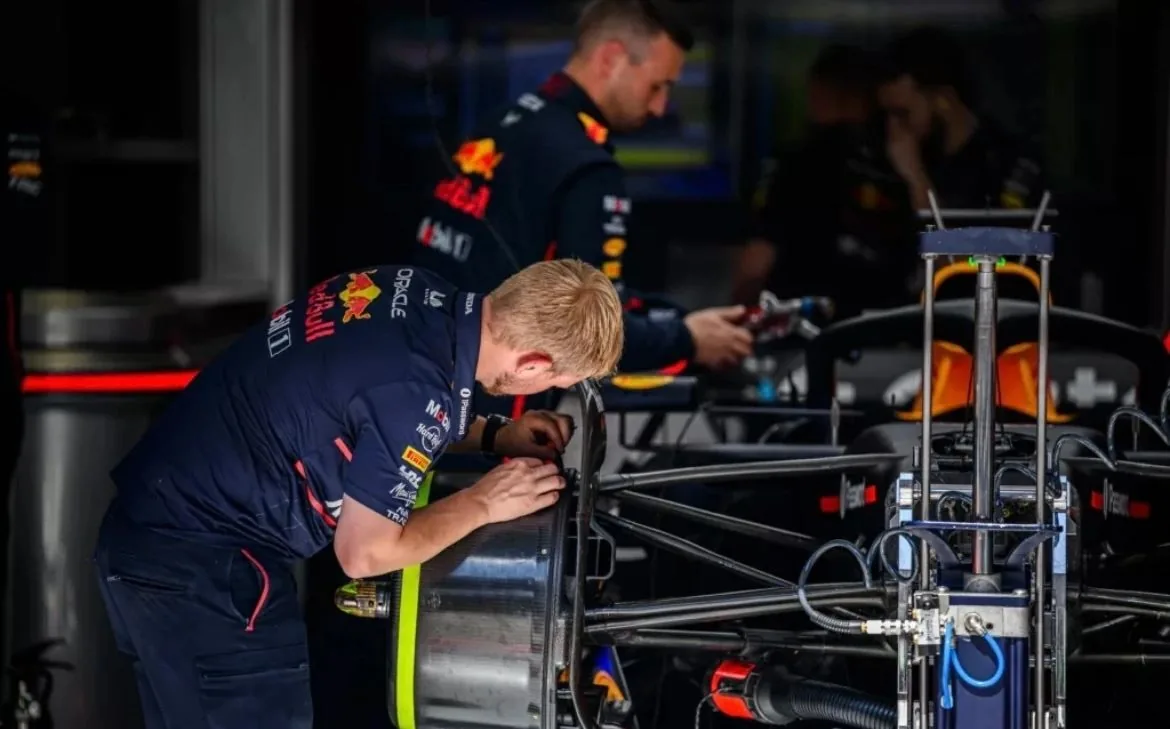
Additionally, the team redesigned the brake cooling ducts — both inlet and outlet — increasing their surface area to improve heat dissipation, which is especially crucial under high thermal load conditions.
Aston Martin: also introduced a revised front wing, now with a more aggressive geometry. This upgrade is tailored to work in tandem with a larger rear wing, and together, the components generate the high level of downforce necessary for racing at the Hungaroring.
Racing Bulls: having experienced overheating issues last season, focused on enhancing the car’s cooling systems. The team modified the shape of the front brake drum components, allowing airflow to be directed more efficiently toward the rear of the car.
In addition, the cooling plates at the rear section of the sidepods were enlarged to help maintain a more stable operating temperature for the power unit.